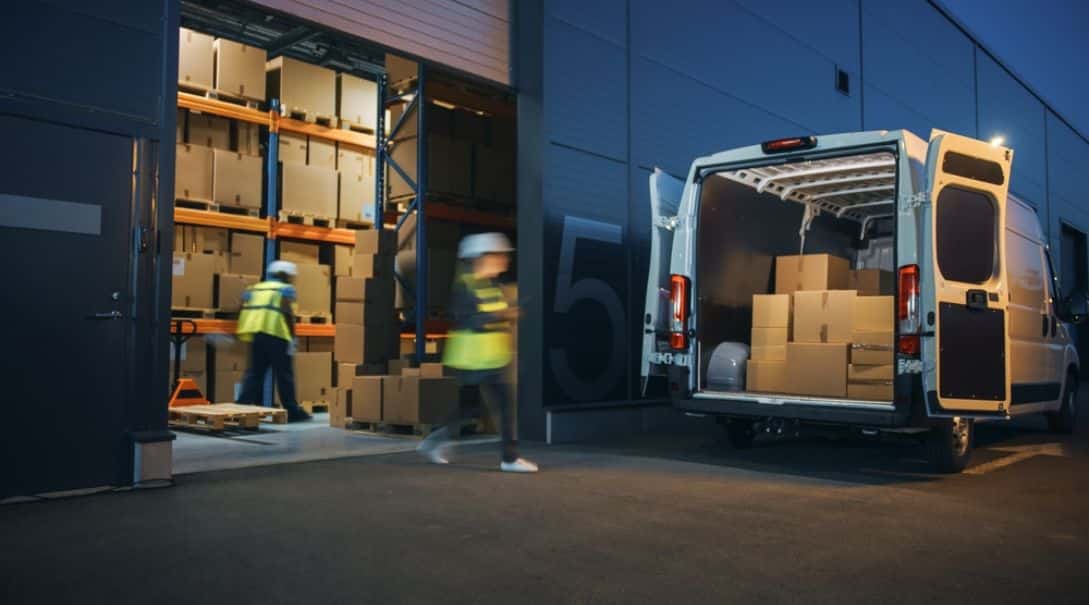
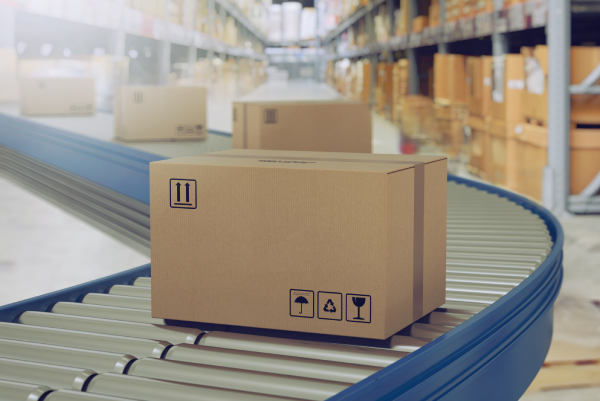
Retail fulfillment is the process of storing inventory and shipping products into retail channels. That includes national chains, regional retailers, specialty stores, distributors, and the networks that support them—often with strict requirements for labeling, packaging, routing, and delivery. For growing brands, it’s often the “next chapter” after direct-to-consumer fulfillment. Instead of shipping one order at a time to individual customers, you’re shipping purchase orders in larger quantities, following retailer playbooks, and coordinating deliveries in a way that keeps your retail partners stocked and confident in your ability to scale.
If eCommerce fulfillment is built around speed and the customer experience, retail fulfillment is built around consistency and compliance. Retailers typically operate on tight receiving schedules and standardized processes across hundreds or thousands of locations. That means your shipments need to show up on time, match what’s expected on paper, and be packaged and labeled in a way that makes receiving fast and error-free. When retail fulfillment is done well, it supports stable wholesale revenue and helps brands expand distribution without drowning in operational headaches. If you’re evaluating a partner specifically for this channel, the best “next step” resource is eWorld’s retail fulfillment services.
Retail Fulfillment vs. eCommerce Fulfillment
Although retail and eCommerce fulfillment share the same basic idea, the workflows are fundamentally different. In eCommerce, most shipments are single orders going to individual customers, often through parcel carriers, with a strong focus on fast turnaround and branded presentation. Retail fulfillment typically starts with a purchase order, then moves through a workflow that prioritizes accuracy, carton and case pack rules, retailer routing requirements, and delivery processes that can include freight, appointment scheduling, and strict ship windows.
That difference matters because it changes where brands tend to run into issues. A DTC process might fail when it can’t keep up with volume spikes or returns, while a retail process often fails when details are missed. Incorrect carton labeling, wrong case quantities, missing documentation, or shipments that don’t follow the retailer’s routing guide. Many growing brands eventually discover that a fulfillment setup that works well for DTC can still create expensive friction in retail if it isn’t built for compliance from the start.
If you’re balancing both channels, eWorld offers both fulfillment services and eCommerce fulfillment services to support your business.
How Retail Fulfillment Works
Most retail fulfillment workflows begin with receiving and warehousing. Inventory arrives at the warehouse and is checked in, counted, and stored so that stock levels stay accurate and available for allocation. This part sounds simple, but it’s foundational for retail. Retailers often expect consistent replenishment, and brands can’t afford errors that lead to short-ships, late shipments, or stockouts during key selling periods. When brands begin scaling nationally, inventory strategy becomes even more important because distributing inventory intelligently can reduce shipping time, lower costs, and make retail replenishment more predictable across regions.
From there, retail fulfillment is driven by purchase orders. A PO dictates what’s shipping, where it’s going, and when it needs to arrive. Unlike many DTC orders that can be shipped same day without much extra structure, retail orders commonly include requirements that influence how the order is picked and packed. That includes carton counts, case quantities, pallet needs, pack slips, and sometimes retailer-specific packaging rules. The pick-and-pack process itself can look similar to eCommerce, but retail introduces more guardrails that must be followed closely.
Once the order is picked, the “retail-ready” work becomes the focus. This is where brands either build operational confidence or rack up avoidable costs. Retail shipments often require precise labeling and barcode accuracy, consistent cartonization, and documentation that matches what the retailer expects. A strong compliance check at this stage helps prevent issues that can show up later as refused shipments, chargebacks, or delays that damage retailer relationships. Finally, retail fulfillment concludes with shipping coordination. Depending on the order and retailer, shipments may move via parcel, LTL, or full truckload and may require appointment delivery. Because retail scorecards are often tied to time windows, the shipping and delivery process is not just a logistics step but a part of what determines how you’re evaluated as a vendor.
What Retailers Typically Require
Retailers set requirements because they have to process huge volumes of inbound product efficiently. Their receiving teams need shipments to arrive in a consistent format so they can scan, verify, and move inventory into store or distribution workflows quickly. When shipments don’t match expectations, the retailer absorbs extra labor and time, and those costs are often passed back to vendors. That’s why retail fulfillment demands a higher level of operational discipline than many brands are used to when they first enter wholesale.
Labeling and barcode accuracy are common pressure points. Retailers may require carton labels, pallet labels, or scannable barcodes that follow specific formatting rules and placement guidelines. Packaging requirements also show up frequently, especially around case packs, inner packs, and carton counts. Even when a brand ships the right products, mistakes in how those products are packed can cause delays, rework fees, and inventory receiving errors. Routing guide compliance is another major factor. Retail routing guides define how you’re allowed to ship and may include carrier rules, shipping methods, appointment requirements, and delivery windows. Many chargebacks and rejections happen not because the product is wrong, but because the shipment didn’t follow the routing process.
On top of all that, many retailers evaluate vendors based on on-time and in-full performance. OTIF expectations are closely tied to how reliable you are as a supplier. Meeting OTIF is easier when inventory is accurate, fulfillment is consistent, and shipping is coordinated with retailer requirements in mind. For a growing brand, the big takeaway is that retail fulfillment isn’t just about moving product, it’s about protecting relationships and margins as you scale.
When a Growing Brand Should Invest in Retail Fulfillment

Not every brand needs a sophisticated retail workflow on day one. But there’s usually a moment when retail demand grows faster than operations can keep up. That’s when fulfillment becomes a constraint instead of a growth engine. Many brands reach this point when they start receiving larger POs, add more retail partners, or expand distribution across multiple regions. The more retail channels you add, the harder it becomes to manage the details manually without errors creeping in.
If you’re spending too much time coordinating retail orders, fixing mistakes, dealing with shipping problems, or paying penalties that weren’t part of your original margin model, it’s a sign that your fulfillment operation needs an upgrade. Another common sign is operational conflict between channels. Brands often find that retail fulfillment requirements begin to disrupt DTC workflows, especially when inventory accuracy and allocation aren’t tightly managed.
What to Look for in a Retail Fulfillment Partner
The right retail fulfillment partner doesn’t just ship boxes. They help you build repeatable, compliance-minded processes that make it easier to grow into more retailers, more locations, and higher order volumes without adding chaos. One of the most important traits to look for is experience with retail compliance, because retail has far less tolerance for “close enough.” A partner should be able to support labeling, packaging requirements, cartonization rules, and delivery workflows that align with retailer routing guides.
Technology and visibility also matter more than many brands expect. When you’re dealing with retail partners, you need confidence in inventory counts, order status, and shipment tracking so you can communicate clearly and prevent issues before they escalate. Value-added services can also be a differentiator, especially if your retail channel includes multi-packs, bundles, display prep, or channel-specific packaging.
Finally, if your primary market is the entire U.S., national reach becomes part of the decision. A partner’s distribution strategy and operational footprint can influence transit times, shipping costs, and your ability to keep retail replenishment consistent across regions. That’s why a fulfillment setup that supports multi-channel growth and national scaling tends to perform best over time.
How eWorld Supports Retail Fulfillment for U.S. Brands

Retail growth requires operational consistency. As order volume increases, the margin for error shrinks, and retailer expectations become less flexible. eWorld supports growing brands by providing fulfillment built for retail realities; accuracy, repeatable workflows, and compliance-minded execution while still supporting the broader needs that often accompany retail expansion, such as DTC fulfillment, marketplace operations, and international growth.
If you’re actively evaluating a fulfillment approach for retail channels, the most direct next step is eWorld’s retail fulfillment services.
If expansion beyond the U.S. is part of your long-term plan, we also offer international fulfillment support.
For brands running on Shopify, it’s also important that fulfillment integrates cleanly to keep inventory, orders, and workflows aligned as you grow.
Retail Fulfillment FAQs
What is retail fulfillment in simple terms?
Retail fulfillment is the process of preparing and shipping products to retail partners while meeting their packaging, labeling, and delivery rules so products can be received quickly and accurately.
What’s the difference between retail fulfillment and wholesale fulfillment?
They’re often used interchangeably, but retail fulfillment usually emphasizes retailer compliance requirements and routing guides, while wholesale fulfillment more broadly refers to fulfilling bulk purchase orders.
Do I need EDI for retail fulfillment?
Not always immediately, but many retailers eventually require EDI or structured shipping data. Even when EDI isn’t required, the operational workflows still need to meet retailer expectations.
Why do retailers charge back vendors?
Chargebacks commonly result from late shipments, short shipments, incorrect labeling, noncompliant packaging, missing documentation, or shipping that doesn’t follow a routing guide.
Can a 3PL handle both retail and DTC fulfillment?
Yes, but the partner needs strong inventory controls and structured workflows so retail requirements don’t disrupt DTC operations or create allocation issues.
Next Step: Make Your Retail Operations Retail-Ready
Retail can be a powerful growth channel, but the operational bar is higher than most brands expect. The good news is that when retail fulfillment is set up correctly, it becomes a competitive advantage: fewer problems, more predictable replenishment, and stronger retailer relationships that make expansion easier. If you’re ready to build a retail-ready fulfillment setup that can scale across the U.S., contact eWorld today!