

The Real Cost of In-House Fulfillment vs. Outsourcing to a 3PL: Which Saves Your Business More?
Fulfillment is one of the most important parts of running a product-based business. It affects how quickly customers receive their orders, how accurately inventory is managed, how much time your team spends on operations, and how profitable each sale actually becomes. For many growing businesses, the question eventually becomes whether it makes more sense to keep fulfillment in-house or outsource to a third-party logistics provider.
At first, in-house order fulfillment can feel like the most affordable option. You may already have space to store inventory, your team may be able to pack orders manually, and the business may still be small enough to manage shipping without a dedicated warehouse operation. But as order volume increases, the true cost of internal fulfillment becomes more complicated.
The cost is not limited to postage, boxes, and labor. Businesses also have to account for warehouse space, equipment, software, staffing, training, insurance, management time, inventory errors, delayed shipments, returns, seasonal demand spikes, and the opportunity cost of leadership spending time on logistics instead of growth.
That is where 3PL fulfillment comes in.
A 3PL, or third-party logistics provider, manages fulfillment operations for businesses that want to outsource warehousing, order processing, picking, packing, shipping, and returns. For ecommerce brands, Amazon sellers, retail suppliers, and omnichannel businesses, working with a fulfillment services partner can create more predictable operations, reduce fixed overhead, and make it easier to scale without building a warehouse operation from scratch.
The right answer is not always the same for every business. Some companies are better suited for in-house fulfillment, especially when order volume is low or products require highly specialized handling. Others save more by outsourcing to a 3PL logistics partner that already has the infrastructure, technology, carrier relationships, and fulfillment processes in place.
As logistics publications have noted, the insourcing vs. outsourcing decision often comes down to cost, control, scale, and operational complexity. Supply Chain Dive’s discussion of whether to insource or outsource fulfillment reinforces that businesses need to evaluate more than surface-level fulfillment costs when making this decision.
This guide breaks down the real cost of in-house fulfillment versus outsourcing to a 3PL, when each model makes sense, and how to decide which option can save your business more over time.
What Is In-House Fulfillment?
In-house fulfillment means your business manages the fulfillment process internally. Your company stores inventory, receives orders, picks and packs products, purchases shipping labels, coordinates carrier pickups, handles returns, and manages fulfillment staff or internal team members responsible for those tasks.
For small businesses, in-house order fulfillment often starts informally. Inventory may be stored in an office, garage, back room, storage unit, or small warehouse. Founders or employees may pick and pack orders by hand, print labels through ecommerce platforms, and drop packages off with carriers.
As the business grows, in-house fulfillment becomes more complex. What started as a manageable process can turn into a full operational department. Businesses may need dedicated warehouse space, racking, packing stations, barcode scanning, inventory software, quality control processes, shipping supplies, safety procedures, warehouse staff, and fulfillment management.
This is also where technology becomes a larger factor. Order volume, inventory visibility, shipping updates, and customer expectations become harder to manage manually. Businesses trying to scale internally often need better fulfillment systems, which is why understanding the role of technology in order fulfillment becomes increasingly important.
In-house fulfillment gives businesses direct control, but it also requires them to carry the full responsibility of the fulfillment operation.
Key Features of Internal Logistics
One of the biggest features of internal logistics is facility ownership or direct facility control. A business may lease or own warehouse space, storage space, or a distribution area where inventory is received, stored, and shipped. This gives the business control over how products are organized, how space is used, and how fulfillment workflows are structured.
Internal staffing is another major feature. Instead of relying on a third-party fulfillment provider, the business hires and manages warehouse staff, fulfillment associates, operations managers, or internal team members who handle receiving, picking, packing, shipping, and returns. This can be useful for companies that want direct oversight, but it also creates payroll, training, scheduling, and management responsibilities.
In-house fulfillment also requires internal technology and infrastructure. Businesses need systems to manage inventory, process orders, print shipping labels, track shipments, and maintain accuracy across sales channels. As order volume grows, manual spreadsheets or basic ecommerce tools often become too limited, which can create the need for more advanced warehouse management software.
Another key feature is the ability to build a custom workflow around your products. If your products require special packaging, kitting, assembly, quality checks, temperature controls, fragile handling, or branded presentation, an internal operation may allow your team to design every detail of the process.
Advantages of Internal Logistics
The biggest advantage of internal logistics is control. When fulfillment is managed in-house, your business controls the warehouse, staff, process, packaging standards, inventory layout, and quality control steps. For some businesses, especially those with highly specialized products, this level of control is valuable.
In-house fulfillment can also provide real-time visibility into daily operations. Your team can physically inspect inventory, check order status, troubleshoot issues, and adjust workflows as needed. If a product needs to be pulled, repacked, bundled, or prioritized, an internal team can often act quickly.
Another advantage is the ability to tailor infrastructure to your exact needs. Your packing stations, inventory zones, software workflows, and fulfillment procedures can be designed around your products and customer expectations. This can be helpful for businesses with unusual product dimensions, regulated items, detailed assembly requirements, or custom packaging standards.
However, control comes with cost. The more your business grows, the more resources are required to maintain that control. In-house fulfillment may start simple, but it can become expensive when order volume increases, shipping zones expand, and customer expectations rise.
What Is 3PL Fulfillment?
3PL fulfillment is a logistics model where a third-party logistics provider manages fulfillment operations on behalf of your business. Instead of storing inventory and shipping orders internally, your products are sent to a 3PL warehouse. When customers place orders, the 3PL receives the order information, picks the products, packs the shipment, ships it through the appropriate carrier, and often manages returns processing as well.
For businesses looking at insourcing vs outsourcing fulfillment operations, 3PL logistics cost control, the main benefit of outsourcing is that it converts many fixed operational costs into variable fulfillment costs. Instead of paying for warehouse space, full-time staff, equipment, software, and shipping infrastructure, your business pays for the services it uses.
A 3PL ecommerce fulfillment partner can also help businesses scale more efficiently. As order volume grows, the 3PL already has fulfillment processes, warehouse systems, labor resources, carrier relationships, and shipping workflows in place. This can reduce the pressure on internal teams and make it easier to support growth across multiple sales channels.
For ecommerce brands, 3PL fulfillment can simplify operations by giving the business access to a professional fulfillment network without requiring the company to build that network internally. DHL’s overview of in-house vs. outsourced logistics also highlights that outsourcing can give businesses access to logistics expertise and infrastructure without taking on every operational responsibility themselves.
If you are still defining the basics, eWorld’s guide on what a fulfillment service is provides a helpful foundation for understanding how outsourced fulfillment supports ecommerce and product-based businesses.
Key Features of 3PL Fulfillment
Receiving and storage are core parts of 3PL fulfillment. Your business sends inventory to the 3PL warehouse, where it is received, counted, organized, and stored until orders are placed. This removes the need to manage your own storage space or warehouse layout.
Inventory management is another key feature. A 3PL tracks inventory levels, monitors stock movement, and helps ensure orders are fulfilled from available inventory. Many 3PL providers integrate with ecommerce platforms, marketplaces, and order management systems so inventory and order data can move more efficiently between systems.
Order processing is handled by the 3PL once an order is placed. The order is received through an integration or system connection, then prepared for fulfillment based on the business’s rules and requirements.
Picking and packing are central to the fulfillment process. The 3PL locates the correct items, picks them from storage, packs them according to the agreed process, and prepares the package for shipment. For businesses comparing internal labor against outsourced operations, eWorld’s breakdown of pick and pack fulfillment is a useful resource for understanding what happens behind the scenes.
Shipping is another major feature of 3PL logistics. A 3PL works with carriers to move packages from the warehouse to the customer. Because many 3PLs ship large volumes across multiple clients, they may have access to carrier relationships, shipping technology, and rate structures that individual businesses may not be able to secure on their own.
Returns processing can also be handled by a 3PL. Returned products may be received, inspected, restocked, disposed of, or routed based on your business rules. This can reduce the burden on internal customer service and operations teams, especially for brands that need a smoother process for outsourcing returns without damaging customer loyalty.
Advantages of 3PL Logistics
One of the biggest advantages of 3PL logistics is scalability. As order volume increases, a 3PL can help your business handle growth without immediately leasing more warehouse space, hiring more staff, or purchasing additional equipment. This is especially valuable for businesses with seasonal spikes, promotional campaigns, or rapid growth.
Another advantage is that 3PL providers already have defined fulfillment processes. They are built to receive inventory, process orders, manage storage, pack shipments, coordinate carriers, and handle returns. Instead of creating every fulfillment process internally, your business can plug into an existing fulfillment operation.
A strong 3PL partner can also support continued operational improvement. Fulfillment providers are focused on logistics every day. They may help identify shipping efficiencies, packaging improvements, inventory process updates, and workflow changes that improve accuracy or reduce costs.
The reduction of fixed overhead is another major benefit. With in-house fulfillment, your business may need to pay for buildings, rent, utilities, staff, equipment, warehouse software, insurance, packing stations, shelving, and management. With a 3PL, many of those costs are absorbed into the fulfillment provider’s operating model and billed based on services used.
This can make 3PL fulfillment especially valuable for growing businesses that want to control costs while increasing fulfillment capacity. For businesses evaluating broader supply chain decisions, BCI Global’s article on insourcing or outsourcing supply chain activities is another useful reference for thinking through which functions should stay internal and which may be better handled by external partners.
When Should You Use In-House Fulfillment?

In-house fulfillment can be the right choice when your business is still early in its growth, order volume is manageable, and fulfillment does not interfere with larger business priorities. It can also make sense when your products require a level of customization or control that is difficult to outsource.
The key is to look beyond whether your team can physically ship orders today. You also need to consider whether in-house fulfillment will remain efficient as your business grows.
If your volume is low, in-house fulfillment may be practical. A business shipping a small number of orders each week or month may not need a full 3PL relationship yet. At low volume, the cost of outsourcing may not provide enough savings to outweigh the simplicity of handling orders internally.
In-house fulfillment may also make sense if you already have space. If your business has unused storage capacity, a manageable inventory footprint, and enough room to pack and ship orders safely, internal fulfillment may be cost-effective for the time being.
Another factor is customer concentration. If most of your customers are located in one region, your shipping process may be simpler and less expensive to manage internally. A local or regional customer base can reduce the need for a distributed fulfillment strategy.
Some businesses also need extreme customization or specialized handling. If your products require detailed assembly, product testing, unique packaging, fragile handling, or compliance-driven workflows, managing fulfillment internally may provide the direct oversight needed to maintain standards.
In-house fulfillment can also be a fit when your team has logistics expertise and wants hands-on control. If you already have experienced operations staff, warehouse systems, and a clear process, internal fulfillment may be a strategic advantage rather than a burden.
However, businesses should regularly reassess whether internal fulfillment is still serving the company. The model that works at 50 orders per month may not work at 500, 5,000, or more. As fulfillment becomes more complex, the hidden costs of poor fulfillment can grow quickly.
When Should You Use 3PL Fulfillment?
3PL fulfillment often becomes the better option when order volume is growing, customer expectations are increasing, and fulfillment is taking too much time away from core business activities. At that point, outsourcing can help the business operate more efficiently while reducing the need for additional fixed overhead.
A common sign that it may be time to consider a 3PL is when your business is consistently above roughly 200 orders per month. This is not a universal cutoff, but it is often a point where fulfillment begins to require more structure, labor, space, and software. As volume increases, small inefficiencies become more expensive.
A 3PL may also make sense if your business needs faster delivery nationwide. Customers increasingly expect quick, accurate shipping. If your customers are spread across the country, shipping from a single internal location may create longer transit times and higher shipping costs. A 3PL logistics partner can help improve delivery capabilities depending on warehouse location, carrier access, and fulfillment strategy.
Widely distributed customers are another reason to outsource. If orders are going to multiple regions, managing shipping zones, carrier options, and delivery expectations internally can become difficult. For growing brands, understanding how shipping zones work can make it easier to see why warehouse location and fulfillment strategy have such a large impact on cost and delivery speed.
Another major sign is that fulfillment is consuming leadership time. If owners, executives, marketing teams, or customer service staff are regularly pulled into warehouse problems, order issues, shipping delays, inventory counts, or packing decisions, fulfillment may be limiting growth. Leadership time is expensive, and every hour spent solving logistics problems is time not spent on sales, product development, partnerships, or customer experience.
3PL fulfillment is also useful when a business wants scalable operations without fixed overhead. Instead of committing to more warehouse space, hiring additional employees, or investing in equipment, outsourcing allows the business to expand fulfillment capacity through a partner that already has the infrastructure.
For brands serving customers across multiple regions, multi-site distribution can also help improve delivery coverage and reduce the limitations of shipping every order from one internal location.
Bulk shipping discounts and operational efficiency can also make a 3PL attractive. Many 3PL providers ship at higher volume than individual businesses, which may create access to better carrier options or more efficient shipping workflows. Even when the per-order fulfillment fee is visible, the overall savings can come from reduced labor, fewer errors, lower overhead, and more efficient shipping.
ADL Delivers’ guide on outsourcing vs. insourcing fulfillment also points to an important takeaway: the decision is not simply about whether outsourcing has a line-item cost. It is about whether that cost replaces a larger internal operational burden.
For businesses comparing insourcing vs outsourcing fulfillment operations and 3PL logistics decisions, the best choice often comes down to total cost, not just visible cost. In-house fulfillment may look cheaper on a per-order basis until you account for warehouse rent, payroll, management time, mistakes, software, supplies, equipment, and lost growth opportunities.
The Real Cost Comparison: In-House Fulfillment vs. 3PL Fulfillment
When comparing in-house fulfillment and 3PL fulfillment, many businesses focus on the most obvious expenses first. They compare what they currently spend on postage, boxes, tape, labels, and maybe a few hours of labor against the fees quoted by a 3PL provider. That comparison can be misleading because it usually leaves out the full cost of running fulfillment internally.
The real cost comparison should include both direct costs and indirect costs.
Direct costs are the visible expenses your business pays to fulfill orders. These may include storage space, warehouse rent, payroll, shipping supplies, postage, software, equipment, carrier fees, and returns processing.
Indirect costs are less obvious but still meaningful. These include time spent managing warehouse issues, customer service time spent resolving shipping problems, lost sales from delayed deliveries, inventory inaccuracies, employee turnover, training, inefficient workflows, and the opportunity cost of leadership focusing on fulfillment instead of growth.
For an early-stage business, in-house order fulfillment may still make sense because the operation is small and simple. But as the business grows, the fixed costs of internal fulfillment often increase. You may need more storage space, additional employees, better systems, more shipping supplies, and more management oversight.
With 3PL fulfillment, some costs become more predictable because the provider charges based on the services used. There may be receiving fees, storage fees, pick and pack fees, shipping fees, and special project fees. While those costs are visible, they may replace a much larger internal cost structure.
The right way to compare both models is to ask:
- How much are we spending on fulfillment today?
- How much time does our team spend managing fulfillment?
- How often do fulfillment issues create customer service problems?
- How much space will we need if the order volume doubles?
- How much labor will we need during seasonal peaks?
- How much growth is delayed because our team is focused on logistics?
Once those questions are answered, businesses often get a clearer picture of whether in-house fulfillment is truly saving money or simply hiding costs inside the business.
How Can eWorld Fulfillment Help Your Business?
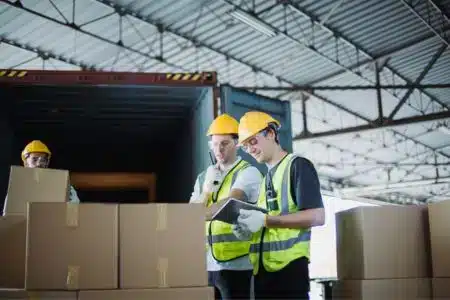
eWorld Fulfillment helps businesses simplify fulfillment by providing scalable 3PL fulfillment solutions built around the needs of growing brands. Instead of forcing your business to manage warehousing, staffing, order processing, packing, shipping, and returns on its own, eWorld Fulfillment gives you an operational partner focused on helping your products move efficiently from inventory to customer.
For ecommerce businesses, Amazon sellers, retail suppliers, and omnichannel brands, the right fulfillment partner can make a major difference in customer experience and cost control. eWorld Fulfillment supports businesses that need reliable order fulfillment, inventory handling, shipping coordination, and fulfillment services that can scale as demand grows.
That support can look different depending on your business model. Ecommerce brands may need general 3PL fulfillment support. Amazon sellers may need FBA prep services to prepare products for Amazon’s requirements. Retail-focused brands may need retail fulfillment services to support wholesale, retail, or omnichannel growth. Shopify merchants may benefit from a fulfillment partner that understands Shopify fulfillment and how ecommerce orders move from storefront to customer.
When fulfillment is handled internally, growth can create pressure quickly. More orders require more labor. More inventory requires more space. More sales channels require better systems. More customers create higher expectations for speed, accuracy, and communication. eWorld Fulfillment helps remove that pressure by giving businesses access to fulfillment infrastructure without requiring them to build and manage it all in-house.
Whether your business is outgrowing a small internal setup or looking for a more efficient way to manage 3PL ecommerce fulfillment, eWorld Fulfillment can help you evaluate the right next step. The goal is not just to ship orders. The goal is to create a fulfillment process that supports growth, protects your customer experience, and helps your team focus on the parts of the business that drive revenue.
If you are actively comparing providers, eWorld’s guide on questions to ask your fulfillment provider can help you evaluate fit, pricing, capabilities, and long-term scalability before making a decision.
To learn more, visit eWorld Fulfillment’s fulfillment services page or get a quote to explore how a trusted 3PL partner can help your business scale with greater confidence.
FAQs
Related Posts
How to Choose the Right Retail Fulfillment Services Partner
Reducing Returns with Better Fulfillment Accuracy
Top 10 Questions to Ask Your Fulfillment Provider
Continue Reading
- How to Choose the Right Retail Fulfillment Services Partner
- The Real Cost of In-House Fulfillment vs. Outsourcing to a 3PL: Which Saves Your Business More?
- Reducing Returns with Better Fulfillment Accuracy
- Top 10 Questions to Ask Your Fulfillment Provider
- Subscription Box Fulfillment: How to Delight Repeat Customers
Categories
- B2B/Retail (3)
- Case Study (2)
- Direct Response (10)
- eCommerce (16)
- FBA (6)
- Fulfillment (35)
- International (2)
- News (1)
- Shipping (24)
- Subscription Box (13)